




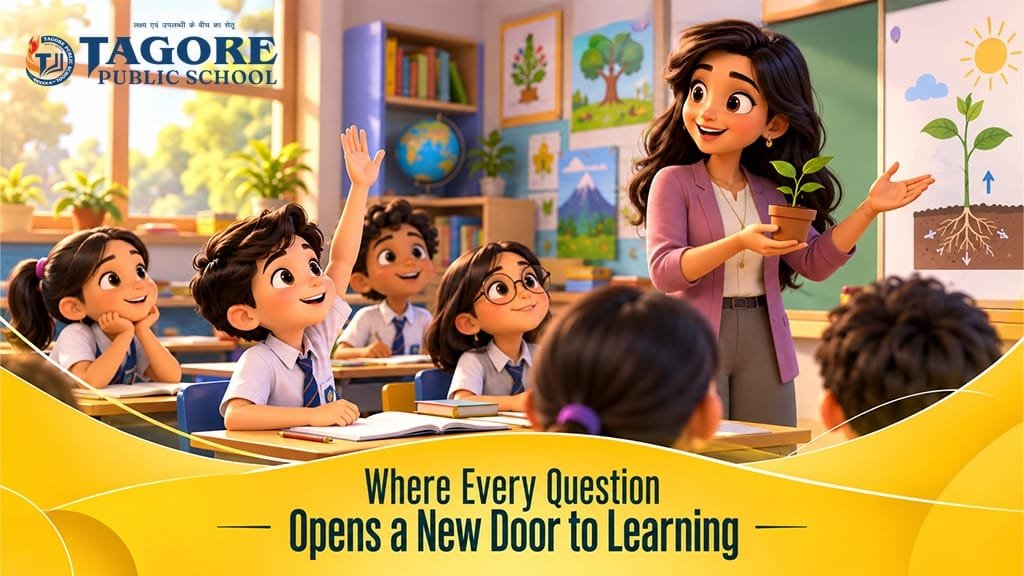
A child asks, “Why does this happen?” and suddenly, a simple classroom lesson can become an opportunity to explore, investigate and think.
For young learners, questions are more than a way to seek information. They are a natural expression of curiosity. When children ask questions, they are trying to understand the world around them, connect new information with what they already know and make sense of their experiences.
At Tagore Public School, Sector 50, Nirvana Country, Gurugram, we believe that meaningful learning begins when students are encouraged to participate in the learning process. A question can become the starting point for a discussion, an experiment, an observation or a project. This approach helps create classrooms where children are not simply expected to remember information, but are encouraged to think about it.
Why Curiosity Matters in the Classroom
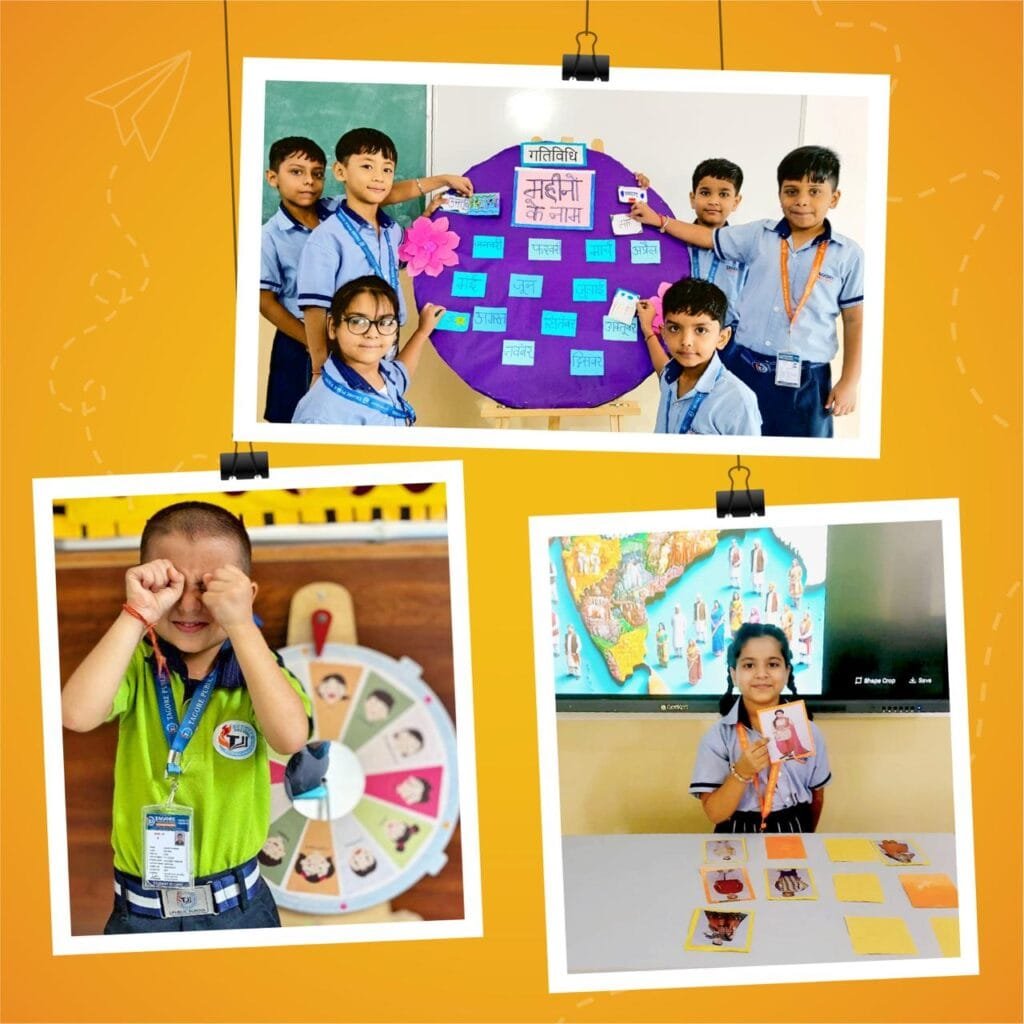
Children are naturally curious. They observe things closely and often ask questions that adults may not expect. Why does a plant grow towards sunlight? Why does ice melt faster in one place than another? Why do communities celebrate festivals differently? What would happen if we changed something in an experiment?
These questions may appear simple, but they represent important stages of learning.
Curiosity encourages children to observe, question, investigate and form connections. Over time, these habits can contribute to critical thinking and independent learning. Instead of accepting information at face value, students begin to ask how something works, why it happens and whether there could be another explanation.
This is particularly relevant in today’s education environment, where schools are increasingly focusing on conceptual understanding, experiential learning and skills such as problem solving and critical thinking.
At Tagore Public School, this philosophy connects with our approach to creating learning experiences where students can engage with concepts rather than simply receive information.
From Finding Answers to Exploring Possibilities
A curious classroom does not mean that teachers stop providing answers. Rather, it creates opportunities for students to think before the answer is provided.
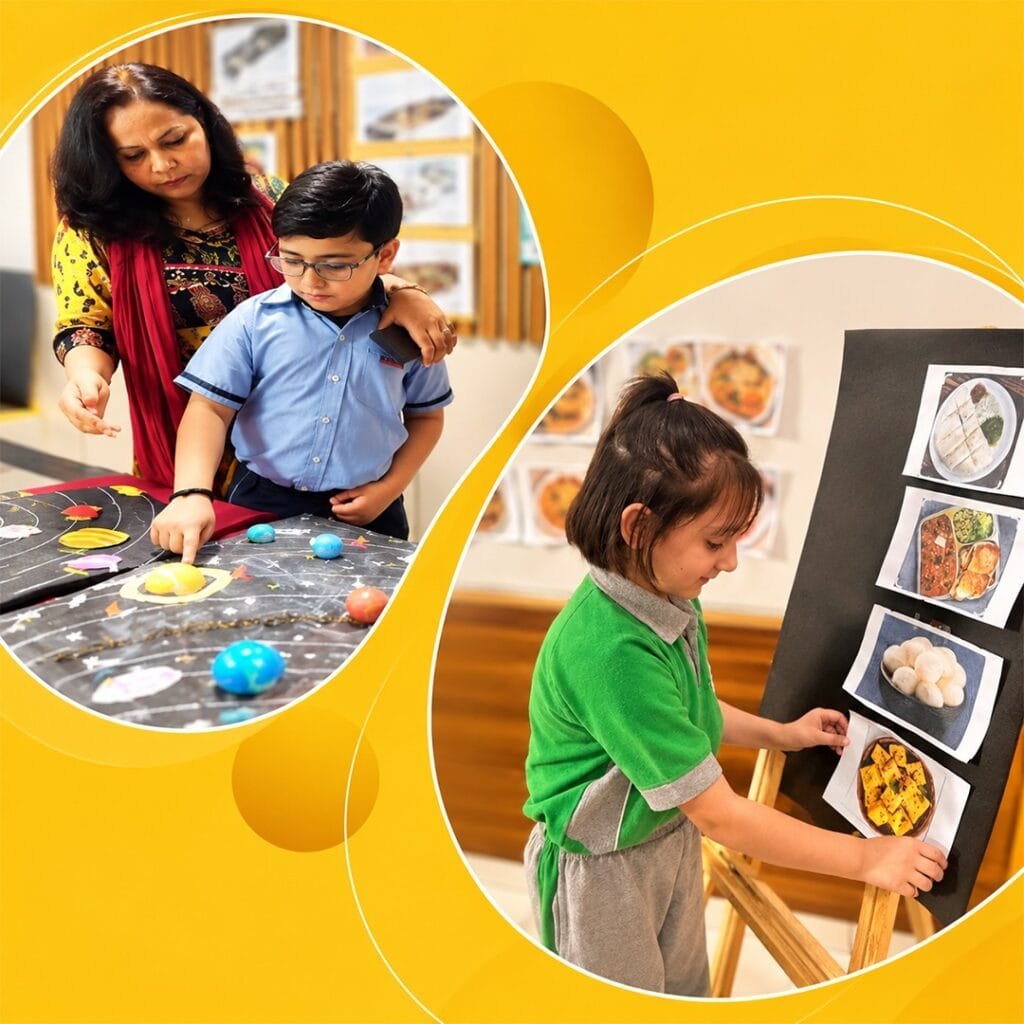
Imagine a Science class discussing plants. Instead of simply introducing the concept of how plants respond to light, students could observe plants growing in different conditions and discuss what they notice. They might make predictions, record their observations and compare their findings.
The scientific concept then has a context.
Similarly, a Mathematics lesson can move beyond solving a fixed set of questions. Students can be asked whether there is more than one way to arrive at the same solution. In English, they can discuss why a character made a particular choice. In Social Science, they can explore how the same event may have affected different people in different ways.
These experiences help students understand that learning is not always about reaching the first correct answer. Sometimes, it is about understanding the process of getting there.
How Questions Develop Critical Thinking
Good Questions Make Students Think Deeper
Not every question encourages the same kind of thinking.
Questions that ask students to recall information have their place in the classroom. However, questions that ask them to explain, compare, predict or justify an idea can encourage deeper thinking.
A teacher might ask, “What do you think would happen if we changed this?” or “What makes you think this solution would work?”
Such questions encourage students to explain their reasoning rather than simply provide an answer.
Over time, this can help children become more thoughtful learners. They begin to understand that having an idea is only one part of the learning process. They also need to explain it, examine it and sometimes reconsider it.
Questions Encourage Students to Learn from One Another
Curiosity can also make classroom learning more collaborative.
When one student asks a question, another student may have a different interpretation or explanation. A classroom discussion can therefore become an opportunity for students to listen to different perspectives, explain their own thinking and build on the ideas of their peers.
This is particularly valuable in Project Based Learning, where students can work together to explore a topic, investigate a problem and develop possible solutions.
At Tagore Public School, collaborative learning forms an important part of the learning experience. Students get opportunities to work together, exchange ideas and approach challenges from different perspectives.
Connecting Classroom Learning with the Real World
Curiosity becomes even more meaningful when children can connect what they learn with what they see around them.
A lesson about sustainability, for example, could begin with something students notice in their own school environment. How much waste does a classroom generate in a day? Which materials can be reused? What changes could reduce unnecessary waste?
A Mathematics activity could involve collecting and interpreting real data. A Science project could begin with an observation made in the school garden. A Social Science discussion could connect a textbook concept with a community issue.
This is where experiential learning becomes valuable. Instead of learning a concept in isolation, students encounter it through an experience and then use academic knowledge to understand it.
At Tagore Public School, Project Based Learning provides opportunities for students to explore connections between concepts and real world contexts. Projects can encourage children to research, collaborate, apply concepts and communicate what they have learned.
What This Can Look Like in a Tagore Classroom
The idea of a curious classroom becomes easier to understand when we bring it into a familiar school setting.
Consider a classroom exploring the question, “How can we make our everyday environment more sustainable?”
Instead of beginning with a ready made list of instructions, students could first observe their surroundings and identify areas that make them curious. They might notice the use of paper, electricity consumption, water usage or waste generated during the school day.
The next step could be to ask questions. Where is most waste being generated? Which materials are being discarded? Can some of them be reused? What changes could make a measurable difference?
Students could then collect information, discuss their observations, research possible solutions and present their findings. Mathematics could enter through data collection and comparison, Science through understanding resources and environmental impact, English through communication and presentation, and Art or Design through creating visual solutions.
This is the kind of interdisciplinary thinking that can emerge when a question becomes the starting point for learning.
The value lies not in the activity alone, but in the process. Students are observing, questioning, researching, collaborating and applying what they know. This is where Project Based Learning can move classroom learning closer to the real world.
The Teacher's Role in a Curious Classroom
Creating curious classrooms requires more than simply telling students to ask questions. The classroom environment needs to make students feel comfortable expressing their ideas.
Teachers play an important role in creating this environment.
When a student asks an unexpected question, the response does not always have to be an immediate explanation. Sometimes, asking the student, “What do you think?” can encourage them to think further. Another question such as, “How could we find out?” can turn curiosity into investigation.
This also helps children understand that not knowing something is not a failure. It can be the beginning of learning.
A child who feels comfortable saying, “I don’t understand this yet,” or “I have another idea,” is more likely to participate actively in the learning process.
At Tagore Public School, this approach complements the school’s focus on creating an environment where students can learn through exploration, collaboration and participation.
IGNITE: Giving Curiosity a Direction
Curiosity becomes especially powerful when children are given opportunities to act on it.
Tagore Public School’s IGNITE framework, Inspiring Great New Ideas Through Exploration, reflects this belief. The emphasis is on encouraging students to explore ideas and engage more actively with the learning process.
A question can become the beginning of a larger journey. Students may research a subject, conduct an investigation, work with classmates, test an idea and eventually present their findings.
This kind of learning allows academic concepts to develop alongside communication, collaboration, creativity, problem solving and critical thinking.
Instead of asking students only to consume information, the classroom becomes a place where they can explore what information means and how it can be applied.
Building Confidence Through Questions
There is another important dimension to curiosity: confidence.
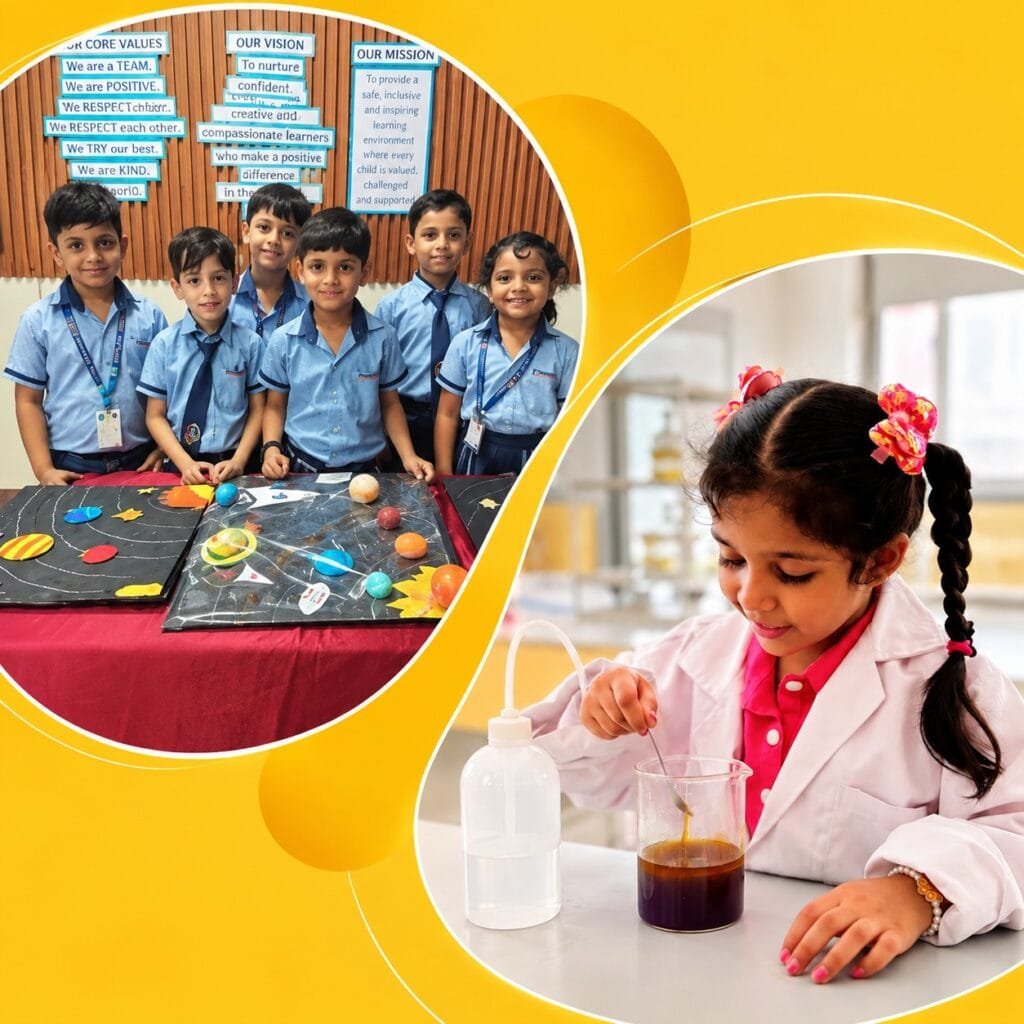
When children are encouraged to ask questions and share their ideas, they gradually become more comfortable expressing themselves. They learn to participate in discussions, explain their reasoning and listen to different viewpoints.
Not every question has to be perfect, and not every idea has to be correct. What matters is that students are given the opportunity to think and participate.
This can be particularly meaningful during the formative years when children are developing their communication skills and learning how to engage with the world around them.
A classroom that welcomes questions therefore supports more than academic learning. It can help children develop the confidence to explore unfamiliar ideas and approach problems with an open mind.
What Curious Classrooms Look Like at Tagore Public School
At Tagore Public School, Sector 50, Nirvana Country, Gurugram, curiosity is connected with a broader approach to learning that includes Project Based Learning, collaborative learning and differentiated instruction.
A curious classroom may not always look dramatically different from a conventional classroom. Students may be reading, writing, discussing, experimenting or working on a project. The difference lies in how actively they are involved in the process.
A student may be investigating a question instead of simply copying an answer. A group may be discussing different solutions to a problem. A teacher may be guiding students towards a discovery rather than immediately explaining every step.
These small shifts can change the learning experience.
For children growing up in Gurugram, where exposure to technology, information and diverse experiences is part of everyday life, developing the ability to question, analyse and adapt can be an important part of their education.
Raising Children Who Continue to Ask
Education is not only about preparing children to answer questions in a classroom or examination. It is also about helping them develop the curiosity to ask meaningful questions beyond school.
A child who learns to ask “Why?”, “How?”, “What if?” and “Could there be another way?” is developing habits that can support learning for years to come.
At Tagore Public School, we see curiosity as an important part of developing young minds. Through Project Based Learning, IGNITE and collaborative classroom experiences, students are encouraged to explore ideas, engage with concepts and become active participants in their learning journey.
Because sometimes, the most valuable thing a classroom can give a child is not an answer.
It is the confidence and curiosity to ask the next question.


