




Curiosity is often the foundation of learning. Children naturally ask questions about the world around them. Why do plants grow towards sunlight? How does a rainbow appear after the rain? Why do some objects float while others sink? These questions may seem simple, but they are often the beginning of scientific thinking.
Encouraging children to explore such questions through science experiments at home can make learning both exciting and meaningful. Practical activities allow young learners to observe concepts in action, helping them understand ideas that might otherwise seem complex when explained only through textbooks.
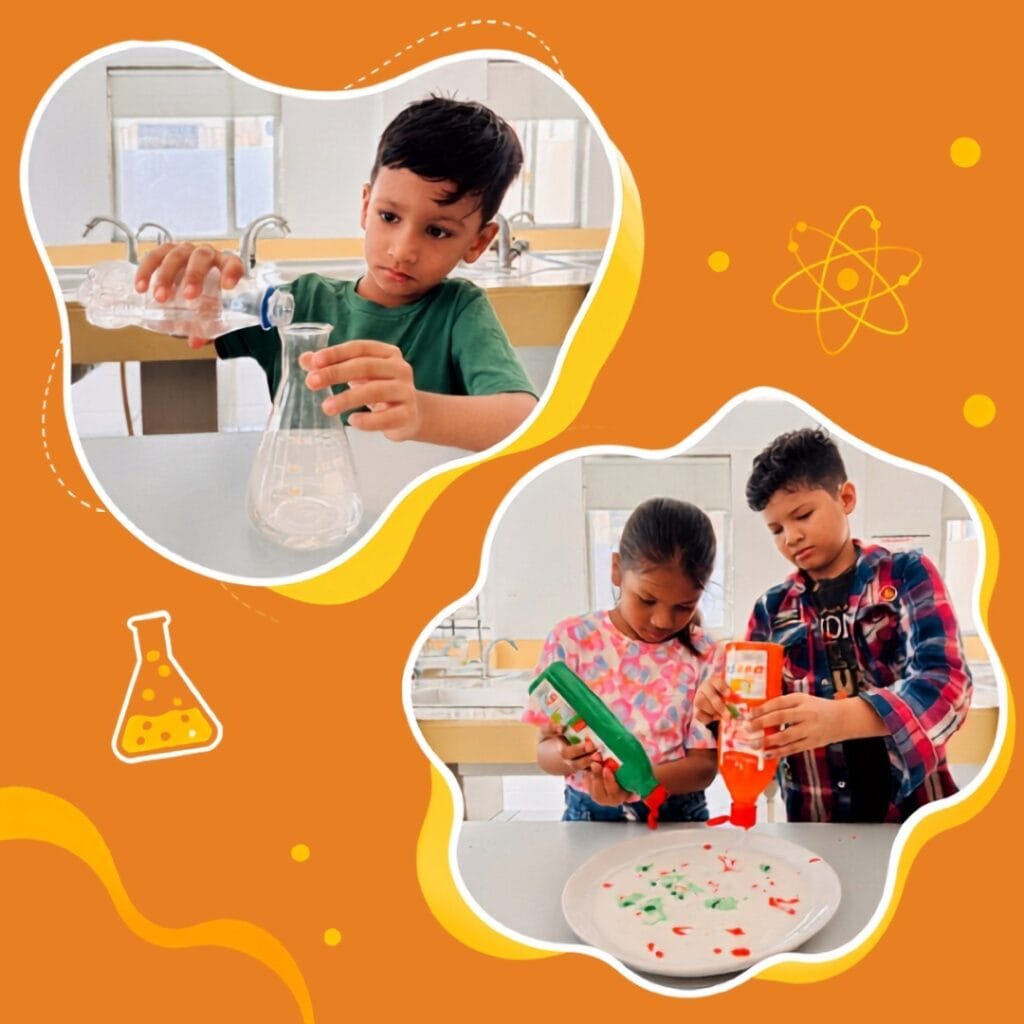
At Tagore Public School, Sector 50, Nirvana Country, Gurugram, we believe that meaningful education extends beyond the classroom. Learning becomes more impactful when students actively engage with concepts, test their ideas, and discover answers through observation and experimentation. Hands-on science activities encourage curiosity, critical thinking, creativity, and problem-solving skills, all of which are essential for lifelong learning.
The good news is that many fascinating science experiments can be performed at home using simple household materials. These activities offer children an opportunity to explore scientific concepts while having fun and developing a deeper appreciation for how the world works.
Why Hands-On Science Learning Matters
Science is much more than memorising definitions and formulas. It is a way of observing, questioning, and understanding the world around us. When children participate in experiments, they become active learners rather than passive observers.
Hands-on learning helps develop observation skills, logical reasoning, analytical thinking, and creativity. It allows learners to see scientific principles unfold in real time, making concepts easier to understand and remember. Instead of simply reading about plant growth or chemical reactions, they experience these processes firsthand.
Practical learning also builds confidence. When children conduct an experiment and successfully observe the outcome, they feel encouraged to ask more questions and explore new ideas. These experiences help foster a positive attitude towards learning and create a strong foundation for future academic success.
At Tagore Public School, Gurugram, experiential learning plays an important role in helping students connect classroom concepts with real-world applications. Through activities that encourage exploration and discovery, learners gain a deeper understanding of subjects while developing valuable life skills.
5 Easy Science Experiments to Try at Home
Homemade Volcano Experiment
One of the most popular science activities for children is creating a homemade volcano. This experiment combines excitement with learning and requires only a few common household ingredients.
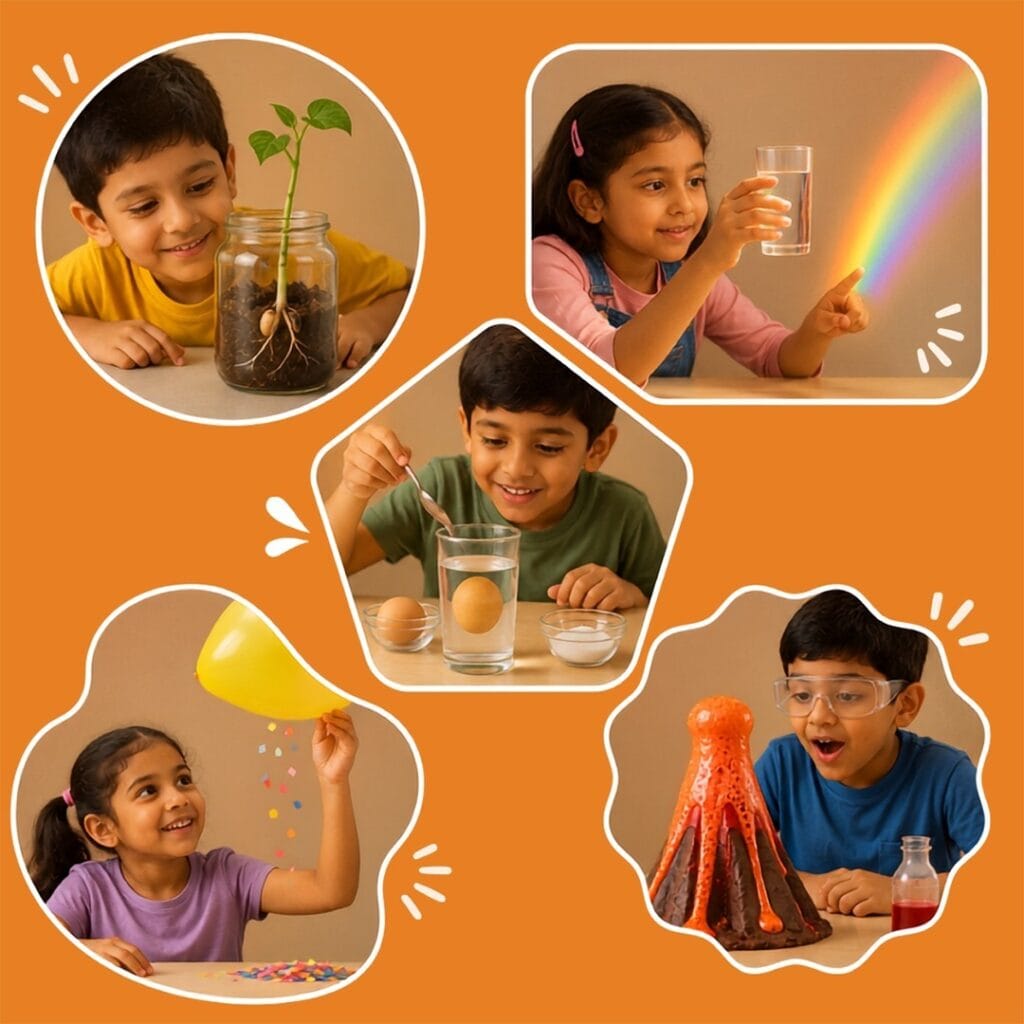
Mix baking soda, a few drops of food colouring, and a small amount of dish soap in a container. Slowly add vinegar and watch as the mixture begins to foam and overflow like a volcanic eruption.
This activity demonstrates a chemical reaction between baking soda and vinegar. As the two substances react, carbon dioxide gas is released, creating bubbles and foam. The experiment provides a simple introduction to chemistry while encouraging observation and curiosity.
Growing a Bean Plant in a Glass Jar
Watching a plant grow from a seed is a fascinating experience for young learners. This activity requires a transparent glass jar, cotton, water, and a bean seed.
Place moist cotton inside the jar and position the bean seed between the cotton and the glass surface. Keep the cotton damp and place the jar in a location that receives sunlight. Over the next several days, children can observe roots developing, followed by shoots and leaves.
This experiment introduces the process of seed germination and helps children understand the conditions necessary for plant growth. It also teaches patience and responsibility while encouraging a connection with nature.
Completing household activities together also strengthens family relationships. Conversations during cooking, gardening, organising cupboards, planning weekly shopping, or arranging bookshelves create valuable opportunities for children to ask questions, share ideas, and develop confidence in expressing themselves.
Creating a Rainbow with Water and Light
Rainbows have fascinated children for generations. With a glass of water, sunlight, and a sheet of white paper, learners can create their own rainbow indoors.
Place the glass of water where sunlight can pass through it and hold the paper in the path of the light. As the light travels through the water, a rainbow effect becomes visible on the paper.
This activity demonstrates light refraction and helps explain how white light contains multiple colours. It is a simple yet effective way to introduce scientific concepts related to light and optics.
The Floating Egg Experiment
This experiment challenges common assumptions and introduces children to the concept of density.
Fill one glass with plain water and place an egg inside. The egg will sink to the bottom. Next, dissolve several spoonfuls of salt in another glass of water and place the egg in it. This time, the egg will float.
The experiment demonstrates how density affects buoyancy. Salt increases the density of water, making it easier for the egg to float. This activity helps children understand an important scientific principle that applies to many everyday situations.
Exploring Static Electricity with a Balloon
A balloon can be used to create a simple and engaging lesson about electricity.
Inflate the balloon and rub it against hair or a woollen cloth for a few seconds. Then bring it close to small pieces of paper and observe what happens. The paper pieces will move towards the balloon and stick to it.
This activity introduces the concept of static electricity and demonstrates how charged objects can attract lightweight materials. It often sparks curiosity and encourages children to explore the science behind everyday phenomena.
How Tagore Public School Encourages Scientific Thinking
At Tagore Public School, Sector 50, Nirvana Country, Gurugram, we believe that science education should inspire curiosity, innovation, and independent thinking. Scientific learning is not limited to textbooks. It involves observation, exploration, experimentation, and problem-solving.
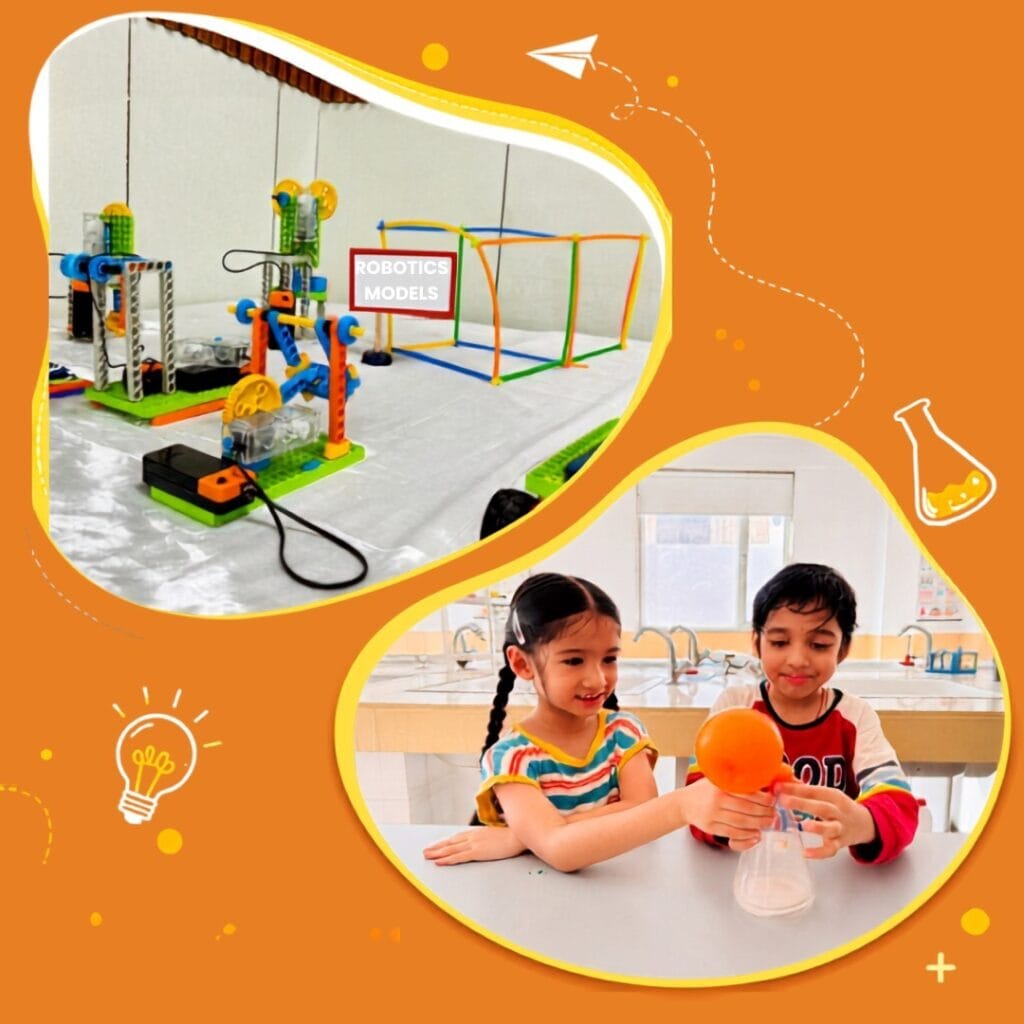
Our educational approach encourages students to actively participate in the learning process through classroom activities, project-based learning, science exhibitions, and interactive experiences. These opportunities allow learners to apply theoretical concepts in practical situations, helping them gain confidence in their abilities while strengthening analytical and critical thinking skills.
By nurturing curiosity from an early age, we aim to develop learners who are capable of questioning, exploring, and contributing meaningfully to the world around them. This commitment to experiential learning helps students become confident thinkers and lifelong learners.
Encouraging Scientific Thinking at Home
Parents play a significant role in supporting a child’s learning journey. Home science experiments provide an excellent opportunity to strengthen curiosity and create meaningful learning experiences outside the classroom.
Simple conversations before and after an experiment can make a significant difference. Asking questions such as “What do you think will happen?” or “Why do you think the result changed?” encourages children to make predictions, analyse outcomes, and develop logical reasoning skills.
Maintaining a science journal can also enhance the experience. Recording observations, drawing diagrams, and writing findings helps children reflect on their discoveries while improving communication and organisational skills.
When learning becomes a shared experience between parents and children, it creates opportunities for meaningful discussions and encourages a deeper interest in science and exploration.
Frequently Asked Questions
Most simple science experiments are safe when conducted under adult supervision using commonly available household materials. Parents should guide younger children and ensure basic safety precautions are followed.
Inspiring Curiosity Beyond the Classroom
Many scientific discoveries begin with a simple question. Whether it is observing a seed sprout, watching a chemical reaction take place, or creating a rainbow from sunlight, every experiment offers an opportunity to learn something new.
At Tagore Public School, Sector 50, Nirvana Country, Gurugram, we are committed to creating learning experiences that encourage inquiry, creativity, and independent thinking. By combining classroom learning with practical exploration, we help students develop the confidence to ask questions, seek answers, and understand the world around them.
The lessons learned through simple science activities often extend far beyond academics. They encourage curiosity, resilience, and a willingness to explore new ideas. These qualities play a vital role in shaping confident learners who are prepared to embrace future challenges and opportunities.


