




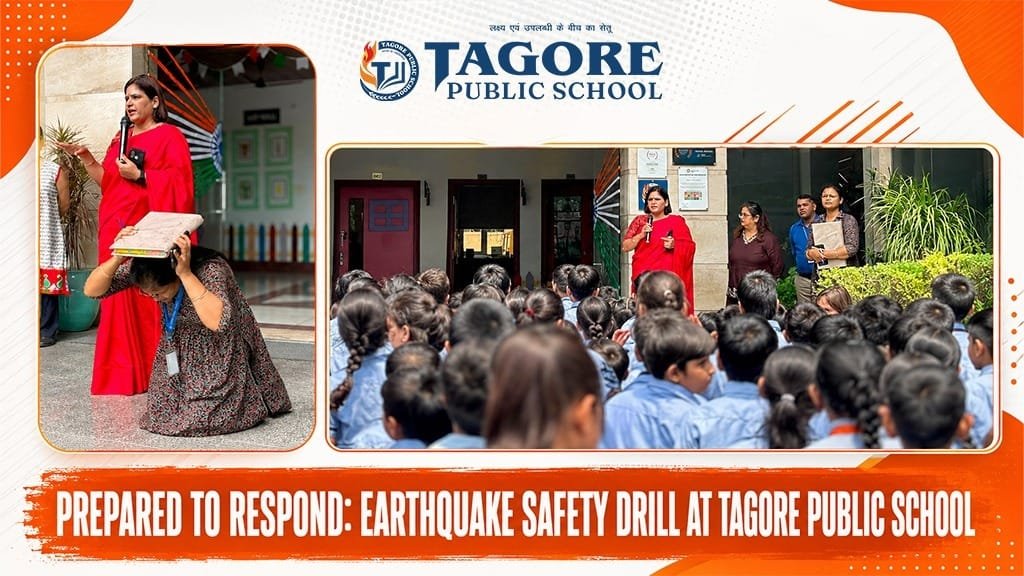
At Tagore Public School, Sector 50, Nirvana Country, Gurugram, we believe that some of the most important lessons are those that prepare students for real life. Our earthquake safety drill gave students and staff an opportunity to practise how to respond calmly, responsibly and collectively during a simulated emergency.
The exercise involved an emergency alarm, guided movement towards designated safe zones, assembly and a safety briefing. The school’s disaster management team also reviewed the exercise, making it an opportunity not only to practise emergency procedures but also to reflect on how preparedness can be strengthened.
For our students, the drill brought an important safety concept out of the classroom and into practice. It helped them understand that knowing what to do during an emergency is important, but being able to respond calmly and follow instructions is equally valuable.
How the Earthquake Safety Drill Unfolded
An earthquake can occur without warning, which makes awareness and preparation particularly important in a school environment. With students and staff present across classrooms and different areas of the campus, a coordinated response requires everyone to understand their role.
Our earthquake safety drill provided an opportunity to practise these principles in a structured and controlled setting.
Responding to the Emergency Alarm
The exercise began with an alarm signalling the simulated earthquake emergency. The familiar rhythm of the school day shifted into an organised safety exercise, giving students an opportunity to practise how they should respond when an emergency signal is raised.
For students, experiencing an emergency alarm in a controlled environment can make the process less unfamiliar. It also reinforces an important lesson: during an emergency, listening carefully to teachers and following instructions is more important than reacting with panic.
The exercise encouraged students to understand that responding calmly and responsibly is an essential part of staying safe.
Moving Towards Designated Safe Zones
Following the alarm, students were guided towards designated safe zones as part of the evacuation process. Teachers and staff supported students throughout the movement, helping maintain an orderly response. This is an important aspect of any earthquake drill in school. Evacuation is not simply about reaching a particular location quickly. It requires students to remain with their groups, follow directions and avoid unnecessary rushing or confusion.
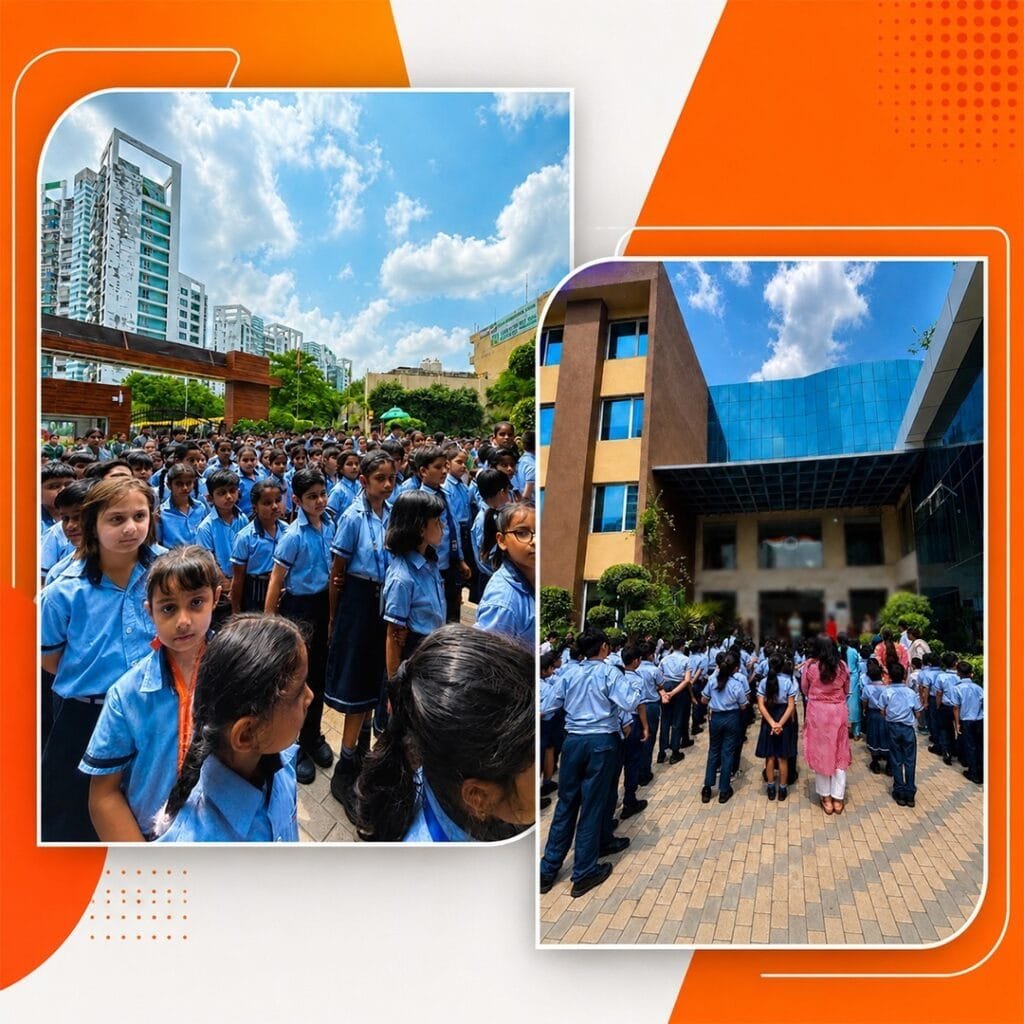
Practising this process helps students understand that safety during an emergency is a shared responsibility. Each individual response contributes to creating a safer environment for the larger school community.
Assembly and Safety Briefing
Once students and staff had reached the assembly area, a safety briefing followed. It provided an opportunity to reinforce the importance of appropriate emergency response and remaining alert during and after an earthquake.
The exercise was also reviewed by the school’s disaster management team. This review is an important part of disaster preparedness in schools because it provides an opportunity to reflect on the response and identify areas where awareness and emergency procedures can continue to be strengthened.
What Our Students Learn Through an Earthquake Drill
One of the most valuable aspects of an earthquake safety drill is the opportunity to turn information into experience.
Students may hear about emergency preparedness in a classroom, but participating in a simulated situation gives them a different understanding of what those instructions mean in practice. They learn the importance of staying calm, listening carefully and following an established procedure. They also learn that safety is not only an individual responsibility.
During an emergency, remaining with a group, avoiding unnecessary rushing and following the instructions of teachers can help create a safer environment for everyone. These actions encourage students to think beyond themselves and understand the importance of cooperation.
Such experiences also help develop qualities that are valuable far beyond an emergency situation. Awareness, responsibility, composure and teamwork are important parts of a student’s overall development and can influence how they approach challenges in many areas of life.
Earthquake Safety for Students: What Should They Remember?
While every emergency situation can be different, students should have a basic understanding of appropriate earthquake safety measures and, most importantly, know that they should follow the emergency procedures communicated by their school.
Stay Calm and Follow Instructions
During an emergency, staying as calm as possible helps students understand instructions and make safer decisions.
Students should listen carefully to teachers and designated safety personnel rather than rushing or reacting impulsively. Panic can make it difficult to understand what is happening and can create additional confusion in a crowded environment.
Following instructions carefully allows students to respond in a more organised manner and helps teachers coordinate the movement of their groups.
Understand Drop, Cover and Hold
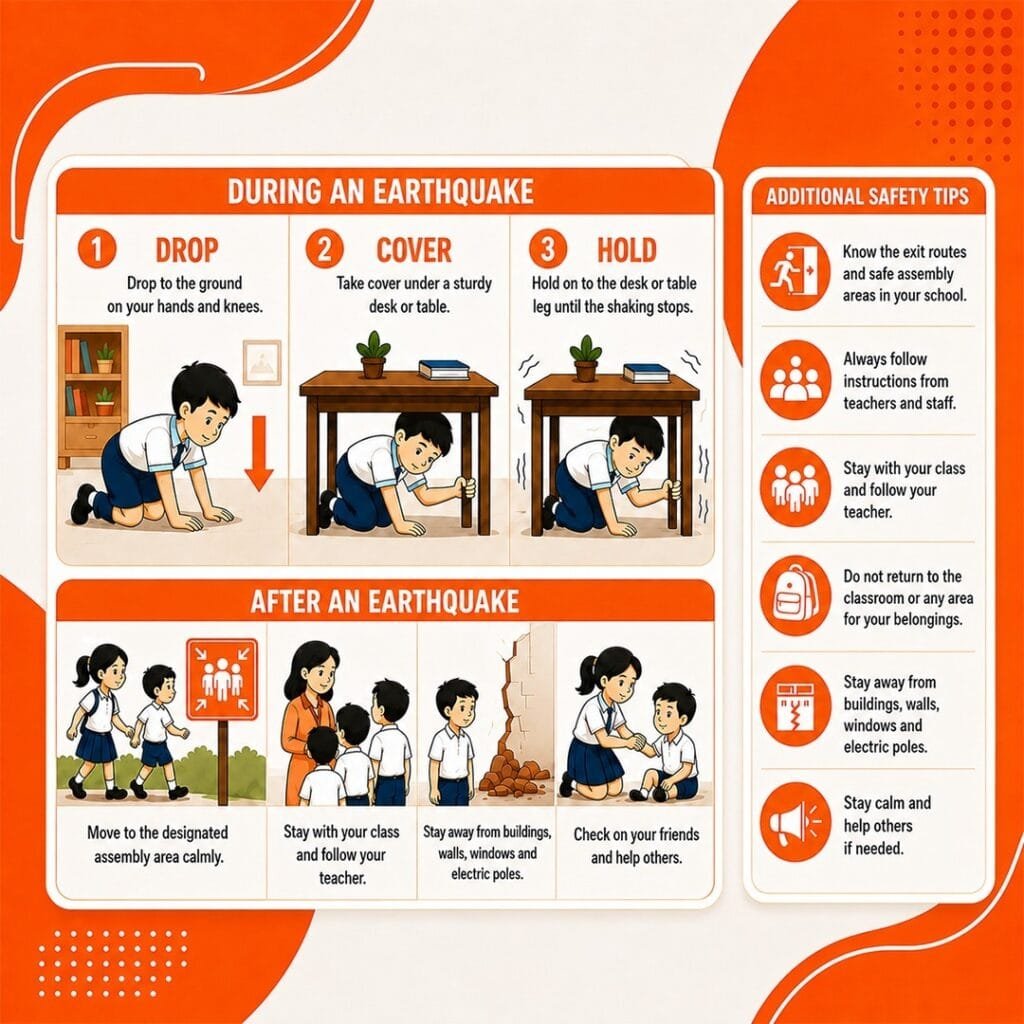
Drop, Cover and Hold is a widely recognised principle of earthquake preparedness. Where appropriate, students are advised to drop down, take cover under a sturdy desk or table and hold on until the shaking stops.
Understanding this principle gives students an important starting point for earthquake awareness. At the same time, the appropriate response can depend on the surroundings and circumstances, which is why students should always follow the safety procedures and instructions provided by their school.
Evacuate Carefully When Instructed
Once evacuation instructions are given, students should move towards the designated safe area without running or pushing. Remaining with their group and following the route communicated by teachers helps maintain an organised evacuation.
Knowing where to assemble after an emergency is equally important. A designated assembly area allows the school community to come together in an organised manner and enables the next steps of the emergency response to be coordinated effectively.
Why Regular School Safety Drills Matter
Awareness becomes more meaningful when students have an opportunity to practise it. A student may understand an emergency procedure when it is explained, but participating in a drill provides an opportunity to experience how that procedure works.
Regular school safety drills help students become familiar with emergency signals, evacuation procedures and designated assembly areas. They also provide teachers and school teams with opportunities to reinforce safety practices and review emergency responses. For students, this familiarity can help replace uncertainty with greater confidence. They learn that an emergency should always be taken seriously, but responding to one does not have to mean panicking.
At Tagore Public School, activities such as these form part of our commitment to creating a safe, aware and responsible learning environment for every student.
Building a Culture of Preparedness at Tagore Public School
At Tagore Public School, we believe education is about preparing students not only for academic challenges but also for the realities of everyday life.
Our earthquake safety drill was a practical expression of this belief. The alarm, guided movement towards designated safe zones, assembly and safety briefing gave our students and staff an opportunity to practise, reflect and learn together. More importantly, the exercise reinforced the value of staying calm, listening carefully and working together during an emergency.
Preparedness begins before an emergency occurs. By giving students opportunities to understand and practise appropriate safety responses, we can help them develop the awareness and confidence needed to handle unexpected situations responsibly.
For us, the earthquake safety drill was therefore more than a school activity. It was a practical lesson in responsibility, teamwork and readiness, helping our students become not only capable learners but also aware and responsible members of the community.


