



Road Safety Education: Building Awareness and Responsible Citizenship
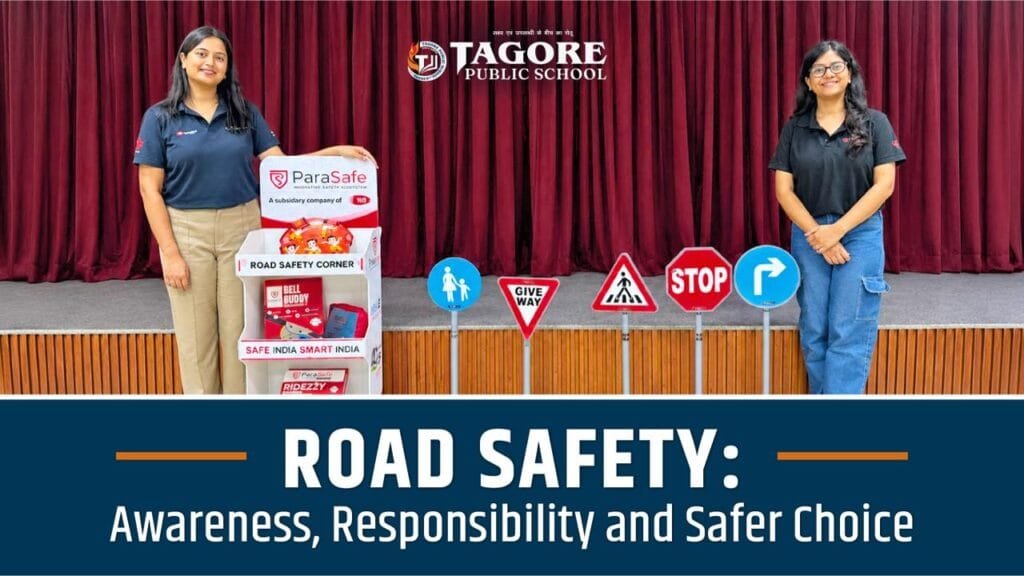
Road safety is an essential aspect of civic awareness and responsible citizenship. For students, understanding how to navigate roads safely involves much more than knowing traffic signals and road signs. It requires an appreciation of road discipline, awareness of one’s surroundings, and an understanding of how individual conduct contributes to the safety of others. At Tagore Public School, Sector 50, Nirvana Country, Gurugram, education extends beyond academic learning to include experiences that prepare students for the responsibilities of everyday life. Road safety education is one such area, offering students an opportunity to understand a subject that directly influences their daily experiences as pedestrians, passengers, and future road users. Through a dedicated Road Safety Awareness Workshop conducted by GoSharpener in collaboration with ParaSafe, students were guided through essential aspects of road safety, including traffic regulations, road signs, safe pedestrian practices and responsible behaviour on the road. The session incorporated discussion, activity-based learning, and creative engagement to make these concepts relevant and meaningful. Go Sharpener Workshop- Road Safe… Why Is Road Safety Education Important for Students? Roads are shared spaces where pedestrians, cyclists, passengers and motorists interact continuously. Safe movement within such an environment depends on awareness, discipline and adherence to established regulations. For students, road safety education provides an early understanding of this shared responsibility. It helps them recognise that traffic rules are not merely statutory requirements, but systems designed to create order and minimise risk. At Tagore Public School, the emphasis is on helping students understand the rationale behind safe road practices. When students understand why a particular behaviour is necessary, they are better positioned to apply that knowledge independently across different situations. This perspective also makes road safety relevant as a life skill. The awareness developed as a pedestrian or passenger today contributes to the responsible decision-making expected of future road users. Why Should Students Understand Traffic Rules? An informed approach to road safety begins with understanding the basic principles governing road use. Students are guided to understand essential traffic rules and consider how these rules influence the movement and safety of everyone on the road. Particular attention is given to pedestrian safety, including the appropriate use of zebra crossings and footpaths, adherence to traffic signals, and the importance of wearing helmets. The Stop, Look and Think principle is also reinforced as a practical framework for making considered decisions in road environments. Go Sharpner Workshop-Road Safe. Such learning is valuable because road safety cannot be reduced to memorising regulations. It requires individuals to remain attentive, assess their surroundings, and respond appropriately. Developing this awareness early can contribute to more responsible road behaviour over time. Why Should Students Learn About Road Signs? Road signs form an essential communication system on roads. They provide warnings, instructions and information that enable road users to anticipate conditions and respond accordingly. As part of the road safety workshop, students were introduced to warning, mandatory, and informational road signs, helping them understand the different purposes these signs serve. The session also familiarised students with the Ministry of Road Transport and Highways, or MoRTH, and its role in promoting road safety. Go Sharpener Workshop- Road Safe… For students, recognising the meaning behind these signs is an important step towards becoming more observant road users. It encourages them to pay attention to the environment around them rather than treating road travel as a routine activity. Understanding road signs also reinforces an important principle of road safety: effective communication on the road depends on road users being attentive to the information provided around them. From Awareness to Responsible Behaviour Effective road safety education must ultimately translate into responsible conduct. Knowledge has value when it influences decisions, particularly in situations where attentiveness and judgement are essential. Students are encouraged to understand how everyday practices contribute to safer roads. Following traffic signals, using designated pedestrian spaces, wearing appropriate protective equipment and remaining alert are behaviours that contribute to a safer road environment. The Stop, Look and Think approach further reinforces the importance of pausing, observing the surroundings and making a considered decision before proceeding. Go Sharpener Workshop- Road Safe… This approach reflects a broader understanding of citizenship. Responsibility is expressed not only through formal civic participation, but also through everyday decisions that demonstrate consideration for the safety and wellbeing of others. For a school, creating this understanding among students is an important part of preparing them for life beyond the classroom. Making Road Safety Learning Relevant Through Participation The effectiveness of awareness programmes often depends on how actively participants engage with the subject. The Road Safety Awareness Workshop incorporated activities that encouraged students to process, recall, and apply the information being discussed. A road safety crossword provided an opportunity to engage with key concepts, while a Rapid Fire Round encouraged students to respond to questions and demonstrate their understanding of road safety principles. Go Sharpner Workshop–Road Safe… Go Sharpner Workshop–Road Safe… Such activities serve an important educational purpose. They shift the learning experience from passive information consumption towards participation and reflection. Students are encouraged to recall information, interpret it, and articulate their understanding, making the subject more relevant to their own experiences. The value of activity-based learning lies in its ability to connect information with application. In the context of road safety, that connection can help students understand how awareness translates into responsible conduct. Encouraging Awareness Beyond the School Environment Road safety education should not remain confined to the classroom. Students are part of families and communities, and their understanding can contribute to conversations about responsible road behaviour beyond the school environment. The workshop included a Road Safety Slogan Writing Competition, giving students an opportunity to articulate their own perspectives on road safety. The activity also encouraged messages aimed at creating greater awareness among parents and family members. Go Sharpener Workshop- Road Safe… This dimension of the programme is particularly relevant to the idea of students as responsible citizens. Education becomes more meaningful when students are able to apply their understanding and contribute constructively to the communities of which


