


Why Model United Nations at Tagore Public School Helps Students Become Future Global Leaders
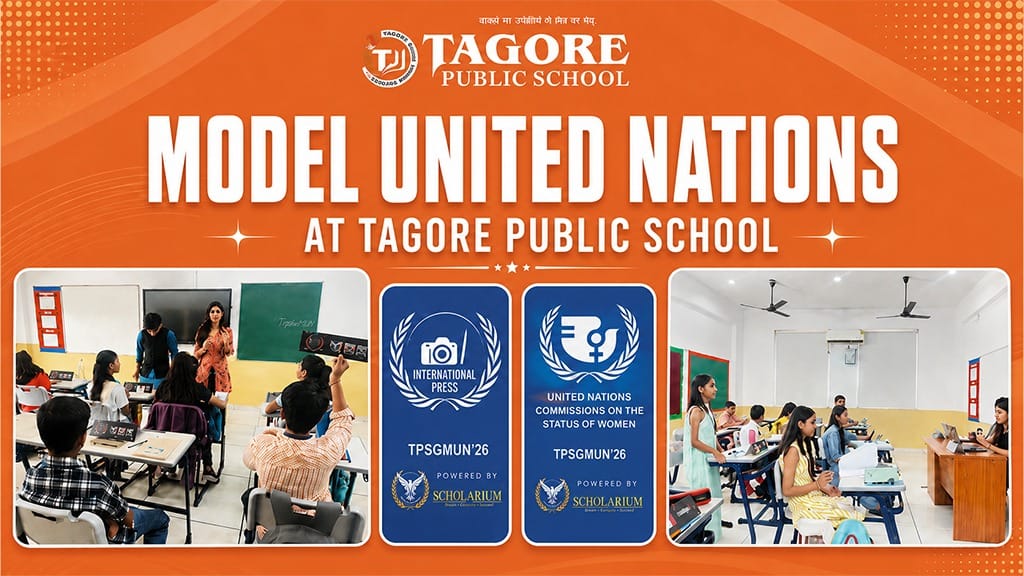
Education today is no longer limited to classrooms, textbooks, and examinations. Students need opportunities that prepare them to understand the world, think critically, communicate confidently, and collaborate with people from diverse backgrounds. One of the most impactful platforms that supports this holistic development is Model United Nations, popularly known as MUN. At Tagore Public School, Sector 50, Gurugram, MUN is not simply an extracurricular activity. It is an immersive learning experience where students develop the confidence to speak, the ability to analyse global issues, and the mindset to lead with empathy and responsibility. Through the school’s dedicated MUN Club and its flagship TPSG MUN conference, students experience diplomacy in action while sharpening skills that prepare them for higher education and future careers. What is Model United Nations (MUN)? Model United Nations is an academic simulation of the United Nations where students represent different countries, debate global issues, draft resolutions, negotiate with fellow delegates, and work together to find practical solutions to international challenges. Unlike traditional classroom learning, MUN encourages students to research their assigned country’s policies, understand different perspectives, present evidence based arguments, and participate in structured discussions. Every committee session mirrors real diplomatic processes, helping students appreciate how collaboration and dialogue shape international decision making. For students, MUN becomes much more than a competition. It becomes a platform to build confidence, leadership, and global awareness while learning skills that remain valuable throughout life. Building a Strong MUN Culture at Tagore Public School At Tagore Public School, Model United Nations is an integral part of the school’s commitment to experiential learning and holistic education. The school has cultivated an environment where students are encouraged to stay informed about current affairs, think independently, and confidently express their viewpoints. The MUN Club serves as a foundation for aspiring delegates. Students regularly participate in training sessions that introduce them to committee procedures, diplomatic protocols, research techniques, position paper writing, public speaking, and parliamentary rules. These structured learning opportunities ensure that even first time participants feel prepared before attending conferences. The school’s flagship event, TPSG MUN, further elevates this experience by bringing together delegates from different schools to deliberate on pressing global issues. Students participate in committee discussions, negotiate with fellow delegates, draft resolutions, and work towards consensus while maintaining the principles of diplomacy and mutual respect. Rather than focusing solely on awards, the experience encourages meaningful participation, collaboration, and intellectual curiosity, values that align closely with the educational philosophy of Tagore Public School. Learning Beyond the Classroom Through MUN One of the biggest strengths of Model United Nations is that it transforms learning into an active experience. Instead of simply reading about international organisations, students become part of simulated United Nations committees where they examine real world challenges from multiple perspectives. Whether discussing climate change, sustainable development, international security, humanitarian crises, technological ethics, healthcare, or economic cooperation, delegates are encouraged to analyse complex situations before proposing balanced and practical solutions. This approach develops informed learners who understand that global challenges require thoughtful discussion, cooperation, and responsible leadership. At Tagore Public School, these experiences help students connect classroom knowledge with contemporary global issues, making learning more meaningful and engaging. Skills Students Develop Through Model United Nations Research and Analytical Thinking Every successful MUN delegate begins with thorough research. Students explore international relations, government policies, historical events, and current affairs while learning to distinguish credible information from unreliable sources. Preparing for committee sessions strengthens analytical thinking and teaches students how to support their viewpoints with facts rather than assumptions. These research skills naturally benefit academic performance across subjects. Public Speaking with Confidence Public speaking is one of the most visible outcomes of participating in MUN. Students regularly deliver opening speeches, defend their country’s position, respond to questions, negotiate with fellow delegates, and participate in moderated discussions. With every conference, they become more articulate, confident, and composed while addressing audiences. These communication skills extend beyond MUN and prove valuable in classroom presentations, interviews, competitions, and future professional environments. Leadership Through Collaboration Model United Nations demonstrates that effective leadership is built on cooperation rather than authority. Delegates work together to draft resolutions, negotiate amendments, build alliances, and achieve consensus despite differing viewpoints. Students learn that listening carefully, respecting diverse opinions, and finding common ground are essential qualities of successful leaders. These experiences help cultivate responsible individuals who can contribute positively within teams and communities. Critical Thinking and Decision Making Global issues rarely have straightforward solutions. During committee discussions, students are expected to evaluate multiple perspectives, consider diplomatic implications, and recommend balanced solutions that address competing interests. This strengthens logical reasoning, independent thinking, and structured problem solving, qualities that support both academic excellence and lifelong learning. Why TPSG MUN Offers a Meaningful Learning Experience TPSG MUN reflects Tagore Public School’s vision of nurturing globally aware and socially responsible students. Throughout the conference, delegates participate in formal committee proceedings, opening speeches, moderated caucuses, unmoderated discussions, diplomatic negotiations, and collaborative resolution drafting. Every stage of the conference encourages students to communicate respectfully while defending their ideas with confidence and evidence. Beyond committee sessions, students interact with peers from different schools, exchange perspectives, and develop friendships built on mutual respect and shared learning. These interactions expose students to diverse viewpoints and broaden their understanding of the world. The emphasis remains on learning, collaboration, and intellectual growth, ensuring that every participant gains valuable experiences regardless of prior MUN exposure. Why Parents Appreciate MUN Participation Parents increasingly recognise that academic excellence alone is not enough in today’s rapidly changing world. Universities and employers value students who can communicate effectively, think critically, solve problems, work collaboratively, and adapt to changing environments. Model United Nations provides a practical platform for developing these competencies from an early age. Many parents observe noticeable improvements in their children’s confidence, curiosity, time management, research habits, communication skills, and awareness of international affairs after participating in MUN activities. These experiences complement classroom learning while preparing students for future academic and professional opportunities. Tagore Public School’s Commitment to Future Ready


