



Project-Based Learning on Food at Tagore Public School
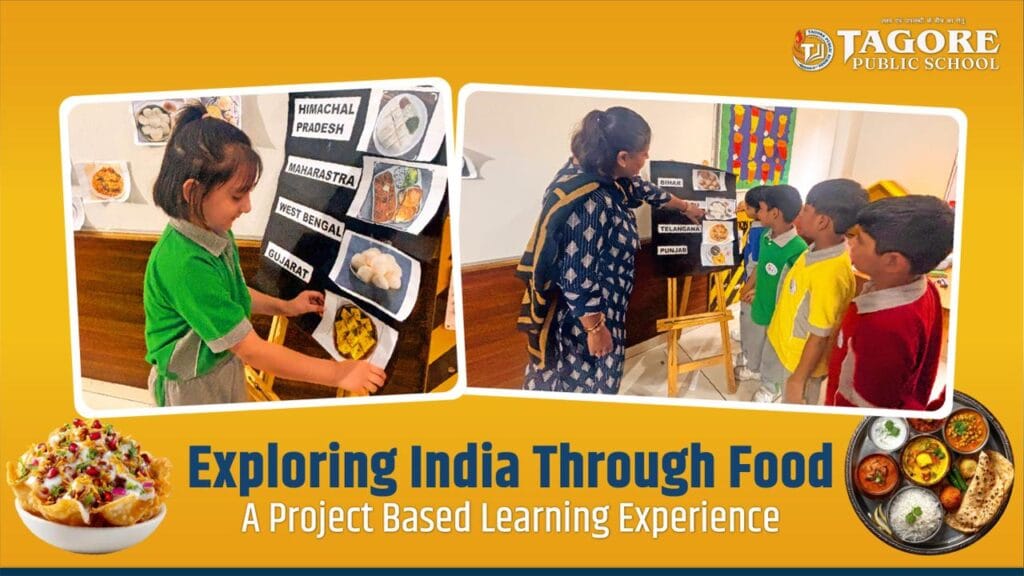
Learning becomes more meaningful when children experience concepts instead of simply reading about them. At Tagore Public School, Sector 50, Nirvana Country, Gurugram, Project-Based Learning is designed to encourage curiosity, participation, and deeper understanding through engaging classroom experiences. As part of the Project-Based Learning on Food, students explored India’s incredible culinary diversity through a thoughtfully planned two-day classroom activity. The project introduced them to famous dishes from different states while helping them understand how food reflects culture, geography, traditions, and identity. By combining visual learning with interactive activities, students developed a stronger appreciation for India’s rich heritage in an enjoyable and memorable way. Understanding Project-Based Learning Project Based Learning encourages students to actively participate in the learning process instead of relying only on textbooks. It allows them to observe, explore, discuss, and apply concepts through carefully designed activities that make learning more engaging and relevant. At Tagore Public School, this approach helps students strengthen their critical thinking, observation, communication, and collaboration skills while making classroom lessons more meaningful. Every project is planned with the objective of connecting academic concepts to real life experiences so that learning remains enjoyable as well as impactful. The Food Project was one such initiative that encouraged students to explore India’s diversity through one of its most loved cultural elements, its cuisine. Day 1 Activity: Discovering India’s Famous Foods The project began with an engaging classroom session where students watched an educational video showcasing different states of India and the famous dishes associated with each region. As colourful visuals appeared on the screen, students enthusiastically recognised familiar favourites while expressing curiosity about dishes they had never seen before. The classroom quickly transformed into an interactive learning space filled with questions, observations, and conversations about the country’s diverse food traditions. The video also helped students understand that every state’s cuisine is influenced by its geography, climate, locally available ingredients, and cultural practices. They discovered that food is much more than a meal. It represents history, traditions, festivals, and the lifestyle of the people who live there. By the end of the session, students had not only learnt the names of several regional dishes but had also started building meaningful connections between different parts of India and their unique culinary identities. Day 2 Activity: Matching States With Their Famous Dishes Building on the knowledge gained during the previous day’s session, students participated in an engaging classroom activity designed to reinforce their learning. They were provided with pictures of famous dishes along with the names of different Indian states. Using what they had observed in the video, students carefully matched each dish with the correct state. The activity encouraged them to recall information, think critically, and confidently make connections between visual cues and their previous learning. Every correct match reflected not just memory but a growing understanding of India’s cultural diversity. At Tagore Public School, classrooms become spaces where students actively participate rather than passively receive information. The matching activity encouraged discussion among classmates, allowing students to explain their choices, learn from one another, and celebrate every correct answer together. Connecting Food With Geography and Culture One of the most valuable aspects of this classroom project was the way it integrated multiple subjects into one meaningful learning experience. While students were identifying famous dishes, they were also becoming familiar with different states of India and the cultural traditions associated with them. This helped them understand that food often reflects the natural resources, climate, festivals, and lifestyle of a region. The activity encouraged children to appreciate India’s diversity while developing respect for the unique traditions that make every state special. Instead of memorising facts, students experienced learning through observation, discussion, and participation, making the concepts easier to understand and remember. Learning Through Participation Interactive activities create lasting learning experiences because students are directly involved in the process. Throughout the project, students observed, discussed, identified, and applied what they had learnt in a collaborative classroom environment. The combination of visual learning and hands-on participation helped strengthen observation skills, memory retention, and logical thinking. Students remained engaged throughout the sessions because every activity invited them to think, respond, and interact with their classmates. Such experiences also nurture confidence by encouraging children to express their ideas freely and participate without hesitation. This is an important part of developing lifelong learners who are curious, confident, and eager to explore new concepts. Experiential Learning at Tagore Public School At Tagore Public School, Sector 50, Nirvana Country, Gurugram, learning extends beyond textbooks through carefully planned classroom experiences that inspire curiosity and active participation. Projects like the Food PBL activity reflect the school’s commitment to experiential learning, where students gain knowledge by observing, exploring, discussing, and applying concepts in meaningful ways. Such initiatives not only strengthen academic understanding but also help develop communication skills, teamwork, creativity, and cultural awareness. By creating engaging opportunities for exploration, the school ensures that students enjoy the process of learning while developing skills that prepare them for future academic and personal success. A Memorable Journey Across India’s Culinary Heritage The Project Based Learning on Food offered students an engaging opportunity to discover India’s rich culinary heritage while connecting it with geography, culture, and everyday life. From watching an informative video on famous regional dishes to confidently matching them with their respective states, every activity encouraged participation, observation, and meaningful learning. The excitement seen in the classroom reflected how experiential learning helps children understand concepts more effectively while making education enjoyable. Through thoughtfully designed initiatives like these, Tagore Public School, Sector 50, Nirvana Country, Gurugram continues to create enriching learning experiences that inspire curiosity, celebrate India’s cultural diversity, and nurture confident learners who are ready to explore the world with knowledge and enthusiasm. Read More Blogs: From Summer Break to School Days: Making the Transition Easy for Children Celebrating Student-Teacher Bonding: A Teacher’s Day Special Growing Confident Learners with Strong Values Parent-Teacher Meetings: A Vital Bridge to Build Trust and Transparency


