




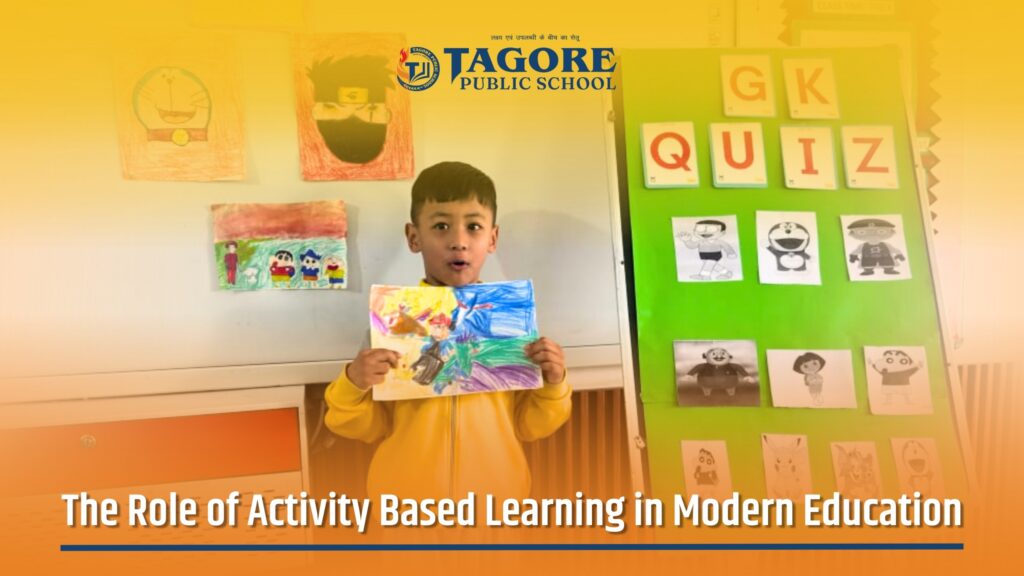
A classroom becomes far more meaningful when students are not just listening but actively involved in what they are learning. When a concept moves beyond explanation and turns into an experience, it becomes easier to understand, remember, and apply. This shift is what defines activity-based learning and why it holds such relevance in modern education.
At Tagore Public School in Sector 50, Gurugram, near Nirvana Country, this approach is reflected in the way lessons are designed and delivered. Students are encouraged to explore ideas, ask questions, and engage with concepts rather than passively receive information. For many parents searching for the best school in Sector 50, Gurugram, this kind of environment reflects a more thoughtful and future-ready approach to education.
Understanding Activity-Based Learning
Activity-based learning focuses on participation, exploration, and involvement. It allows students to engage with concepts through observation, experimentation, and discussion, making learning more dynamic and effective.
Instead of memorising information, students work through ideas, test their understanding, and connect learning to real situations. This process not only improves retention but also builds clarity. When students arrive at an answer through their own effort, the learning becomes more meaningful and long-lasting.

Learning Through Real Experiences
The impact of this approach becomes most visible when students experience a concept directly. While learning about eclipses, students were guided through an activity using light sources and simple objects to recreate the alignment of the Sun, Earth, and Moon.
As the light shifted and shadows formed, the concept unfolded in front of them. What might have seemed complex in a textbook became something they could observe, question, and understand step by step. Students were able to see how an eclipse occurs rather than just read about it.
Moments like these change the way students relate to learning. They begin to associate concepts with understanding rather than memorisation, which leads to deeper engagement.
Building Thinking and Curiosity
When students are actively involved in learning, they naturally begin to think more deeply. They question what they see, explore different possibilities, and try to understand the reasons behind outcomes.
At Tagore Public School, this approach encourages students to go beyond surface-level answers. They are guided to analyse, interpret, and reflect on what they learn. This helps in developing critical thinking skills that are essential not only in academics but also in real-life situations.
Curiosity becomes a natural outcome of this process. Students begin to show interest in learning, not because they have to, but because they want to understand.

Confidence Through Participation
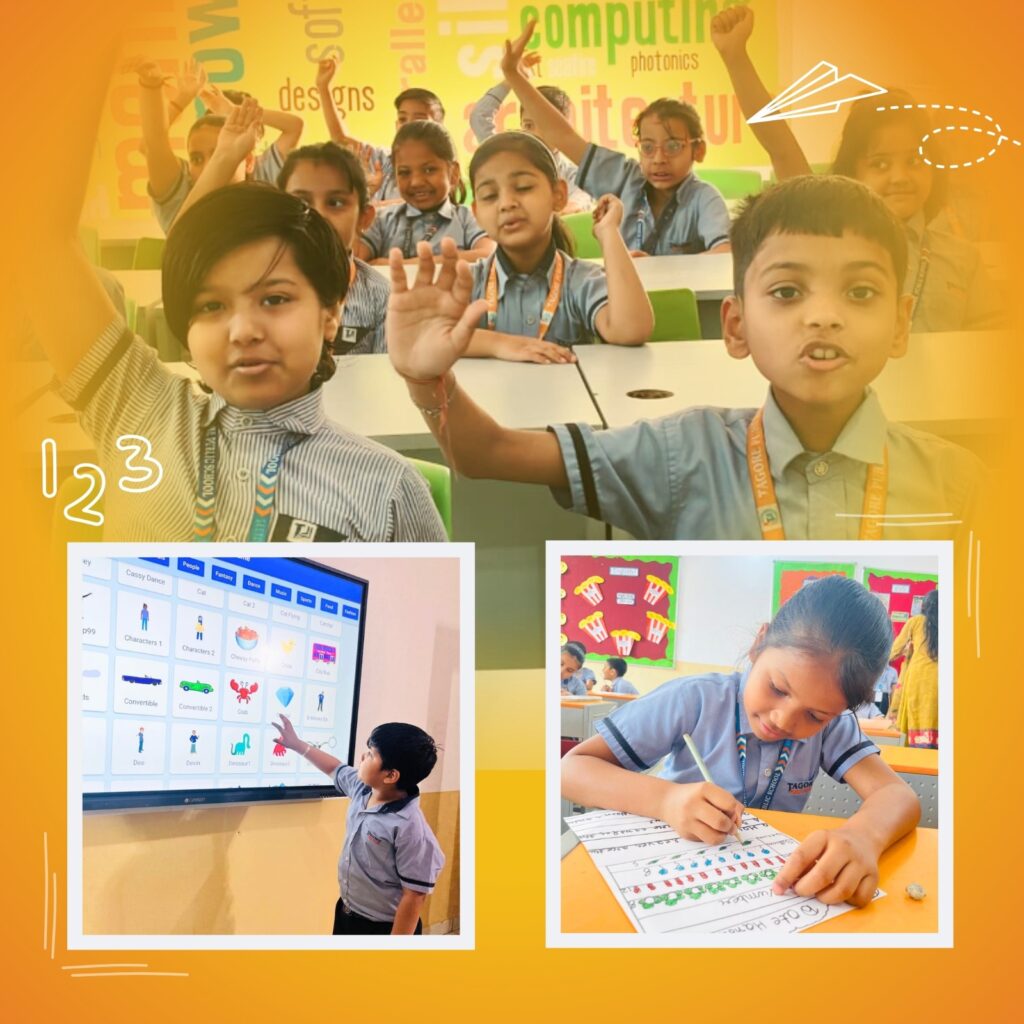
Participation plays an important role in shaping a student’s confidence. When students are given opportunities to express their ideas, take part in discussions, and present their work, they gradually become more comfortable sharing their thoughts. This confidence is not built overnight but develops through consistent engagement. As students participate in activities and collaborative tasks, they learn to communicate clearly, listen to others, and express themselves with greater ease. Over time, this confidence extends beyond the classroom and becomes part of their overall personality.
Connecting Learning With Real Life
One of the key strengths of activity-based learning is its ability to connect classroom concepts with real-life situations. Students are able to see the relevance of what they are learning, which makes education more meaningful.
For example, when students work on projects, observe their surroundings, or relate concepts to everyday experiences, they begin to understand how knowledge applies outside the classroom. This connection helps them develop practical thinking and a stronger sense of awareness.
For parents exploring schools near Nirvana Country Gurugram or looking for a school in Sector 50 Gurugram, this approach ensures that learning goes beyond exams and supports overall development.
A More Engaging Learning Environment
A classroom that follows activity-based learning is naturally more engaging. Students are involved, attentive, and interested in what is happening around them.
At Tagore Public School in Sector 50, Gurugram, this environment encourages students to take ownership of their learning. They are not just completing tasks but actively participating in the process. This creates a sense of responsibility and independence that supports long-term growth. It also allows teachers to understand each student better, as participation reveals individual strengths, interests, and learning styles.
Learning That Stays With Students
When learning is experienced rather than memorised, it stays with students for a longer time. Concepts become clearer, and understanding becomes stronger.
At Tagore Public School, activity-based learning helps students build this connection with their education. They become more engaged, more curious, and more confident in their abilities. This approach ensures that students do not just prepare for exams but develop skills that support them in future learning and everyday life.


