




How Students Learn Better When They Build, Create and Explore
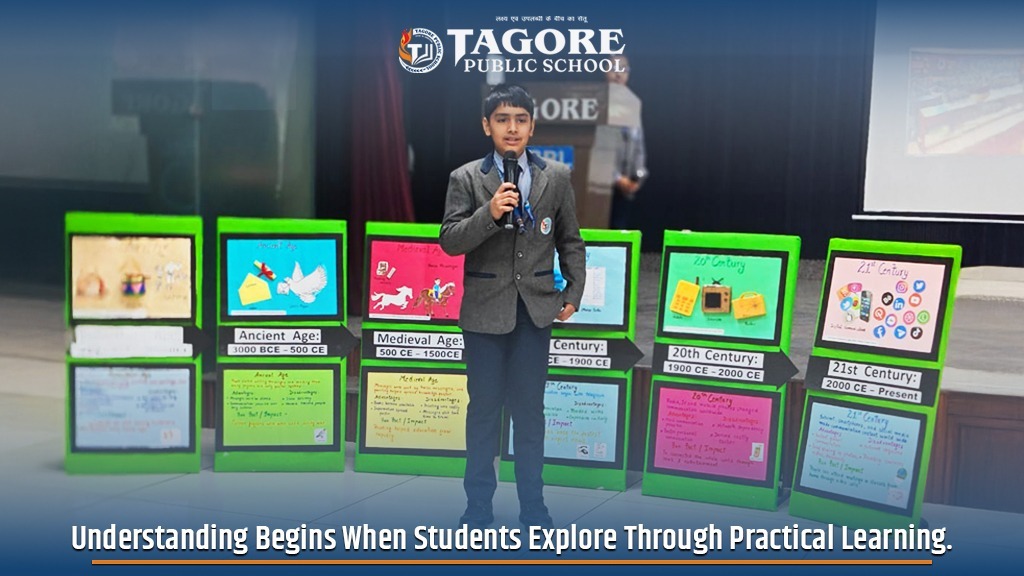
Many students can repeat a lesson immediately after reading it, yet struggle to explain it a week later. This happens because memorised information fades quickly when it is not connected to experience. Children remember ideas more clearly when they interact with them. When a student measures, constructs, observes, or tests something, the concept stops being abstract. The mind treats it as a real event rather than a line in a textbook. Understanding develops naturally, without repeated memorisation. This approach is part of holistic education in schools where understanding matters more than memorising and learning continues beyond the classroom. Why Participation Improves Attention Attention is often seen as a discipline issue, but in many cases it is a learning method issue. Long explanations require effort to maintain focus, whereas activities create focus automatically. A child who may feel restless during lectures often stays absorbed while solving or building something. Participation keeps the brain engaged because it involves decision making. Students think about what will happen next instead of waiting for information. This mental involvement improves concentration and reduces distraction. Such project based learning in school naturally improves focus and concentration in children because they remain mentally involved in the task. From Remembering Answers to Understanding Reasons In traditional learning, students are sometimes introduced to results before they understand causes. They may know that a rule works but not why it works. When they experiment or observe outcomes themselves, the reasoning becomes clearer. For example, a science idea understood through observation remains longer than one only read in a paragraph. A mathematics concept applied in a situation becomes easier than one memorised as a formula. The subject begins to make sense rather than appear difficult. This balanced education approach helps students build strong conceptual understanding instead of depending only on repetition. Curiosity Becomes a Learning Tool Children naturally ask questions when they are allowed to explore. Instead of worrying about giving the correct answer, they focus on discovering it. This changes their relationship with learning. They begin to think instead of recall. Such learning improves confidence because mistakes become part of learning rather than failure. Practical learning methods encourage students to think independently and participate more confidently in classroom discussions. At Tagore Public School in Sector 50, Gurugram, teachers support lessons with project based learning so students observe ideas instead of only hearing them, strengthening holistic education in schools. Memory Improves When Learning Feels Real The brain remembers experiences longer than instructions. Students may forget a definition but recall an activity connected to it months later. During revision, that memory helps them rebuild the concept in their own words. This reduces dependency on rote learning. Students spend less time memorising and more time understanding, which lowers academic stress and improves retention. Because of this, learning beyond the classroom becomes easier as students relate knowledge to real situations. Communication and Confidence Grow Together When students create projects or explain their work, they learn to organise thoughts clearly. Explaining an idea requires understanding it first. Over time, their answers become structured rather than memorised sentences. Group tasks also improve cooperation. Students learn to listen, discuss, and solve differences respectfully. This also contributes to the overall development of students academically and socially and supports confidence building in students. Learning Extends Beyond the Classroom Exploratory learning connects subjects to everyday life. Students recognise mathematical ideas in measurements and scientific ideas in surroundings. Learning stops feeling limited to exams and becomes useful knowledge. Parents often notice children describing what they discovered in school instead of only stating they completed work. This shows involvement and interest in learning rather than obligation. Preparing Students for Future Thinking The real purpose of education is not only to answer familiar questions but to handle unfamiliar ones. Memorisation helps in repetition, while understanding helps in adaptation. Students who explore during learning learn how to approach new problems calmly. They rely on reasoning rather than guessing, which prepares them for higher studies and real-life decisions. Such learning prepares children for future challenges by combining academics with practical understanding. Final Thoughts When students build, create, and explore, learning becomes personal. Concepts stay longer, confidence improves, and curiosity continues beyond textbooks. Education shifts from remembering information to understanding ideas. At Tagore Public School in Sector 50, Gurugram, this balanced education approach supports the overall development of students and meaningful learning beyond the classroom. We continue to encourage learning experiences that help students understand concepts with clarity and confidence. Read More Blogs: Why Physical Education Is Essential for Child Development and Academic Performance in School Understanding the School Fees in Gurgaon: What Parents Should Know Confused About Schools in Gurgaon? Here’s the Top 10 You Should Know TPSG’s Three Pillars of Learning – Curiosity, Collaboration, & Excellence


